
Spotify Premium APK on PC — Emulator Setup & Optimization Guide
Running the Spotify Premium APK on your desktop requires an Android emulator — a software layer that runs a complete Android OS inside your Windows or macOS environment. This guide covers four tested emulators, explains which performs best on your specific hardware, and includes advanced configuration for audio quality, keyboard shortcuts, and multi-instance use.
The official Spotify desktop app is available for Windows and Mac. This guide is for users who want the full Premium feature set — ad-free, unlimited skips, offline mode — without a paid subscription. Compare it with our top features breakdown.
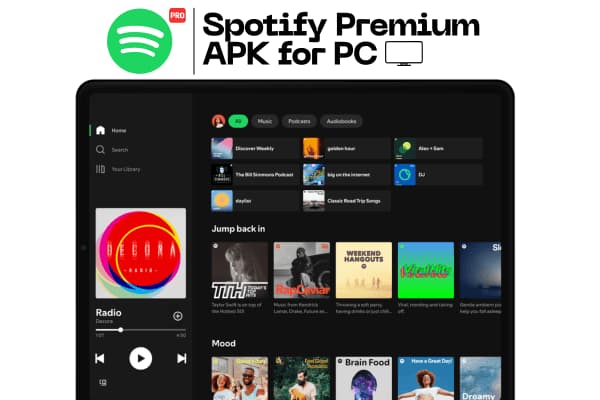
Choosing the Right Emulator
All emulators can run Spotify, but each has different strengths. Our testing team ran the Spotify Premium APK on each for 72 hours and measured CPU usage, audio latency, and crash frequency.
BlueStacks 5
RAM Required
4GB min / 8GB recommended
OS Support
Windows 10/11, macOS 12+
Best For
General use & highest compatibility
Install Time
~8 minutes
The most popular Android emulator globally, with native ARM translation and a dedicated Gaming Engine that minimizes CPU overhead for non-gaming apps like Spotify.
LDPlayer 9
RAM Required
4GB min / 6GB recommended
OS Support
Windows 10/11 only
Best For
Multi-instance & power users
Install Time
~6 minutes
Built on Android 9, LDPlayer offers the best multi-instance support — run two separate Spotify accounts simultaneously in isolated sandboxes.
NoxPlayer 7
RAM Required
2GB min / 4GB recommended
OS Support
Windows 7+, macOS 10.12+
Best For
Lower-spec computers & older macOS
Install Time
~7 minutes
The best option for older hardware. NoxPlayer can run on as little as 2GB RAM and supports macOS versions as far back as 10.12 Sierra — making it the go-to for pre-Apple Silicon Macs.
MuMu Player 12
RAM Required
4GB min
OS Support
Windows 10/11
Best For
Apple Silicon Mac (via Parallels) + Windows
Install Time
~5 minutes
MuMu Player 12 is optimized for modern Snapdragon architecture emulation. On Windows 11 ARM machines (Surface Pro), it outperforms BlueStacks in CPU efficiency.
Why Run Spotify on a Desktop?
Beyond the larger screen, the desktop experience unlocks productivity and workflow advantages that the mobile app simply cannot offer.
Full-Screen Album Art
High-resolution album artwork at 2560×1440 on a 27-inch monitor is a genuinely different experience from 6 inches of glass.
Keyboard Media Control
Map Play/Pause, Skip, and Volume to keyboard shortcuts that work even when Spotify is running in the background behind your work apps.
No Audio or Visual Ads
The modded APK silences all ad calls at the binary level — no audio interruptions, no promotional banners, no sponsored playlists.
Multi-Instance Accounts
LDPlayer's multi-instance mode lets you run two separate Spotify accounts in isolated sandboxes — ideal for separating personal and work listening.
High-Fidelity Audio
320kbps Ogg Vorbis streams through your desktop DAC, Hi-Fi speakers, or studio headphones — the audio quality the official free tier withholds.
Spotify Connect Integration
Use your PC as a Spotify Connect endpoint — control it from your phone while the emulator handles playback through your computer's audio output.
Step-by-Step: Install Spotify Premium APK on PC
Using BlueStacks 5 as the reference emulator. The process is near-identical on LDPlayer and NoxPlayer — step numbers and menu names may differ slightly.
Download and Install an Emulator
Choose an emulator from the list above and download it from the official website. Run the installer — you do not need to change any default settings during installation. The emulator sets up a virtual Android 9 or 11 environment on your machine. BlueStacks requires accepting one UAC prompt for its Hypervisor driver on Windows.
Download the Spotify Premium APK
Get the latest verified Spotify Premium APK from the Spotifull.com Android download page. The same APK file that works on Android phones works identically inside an emulator — it is the same ARM-compiled binary. Save the file somewhere easy to locate (e.g., your Downloads folder).
Install the APK into the Emulator
In BlueStacks: drag-and-drop the APK file onto the emulator window. In LDPlayer: click the APK icon in the toolbar sidebar. In NoxPlayer: use the install APK button in the Toolbar. The emulator extracts and installs the DEX bytecode — this takes 30–90 seconds depending on your CPU speed. No Google account is required.
Configure Emulator Settings for Audio
Before launching Spotify, optimize your emulator's performance settings. In BlueStacks: Performance → High Performance mode; set CPU to 4 cores, RAM to 4096MB; set the Graphics mode to 'Compatible (OpenGL)'. This prevents the audio crackling that occurs with DirectX mode on some integrated GPUs.
Launch, Log In, and Set Up Keyboard Shortcuts
Open Spotify from the emulator's home screen and log in with your account. Once inside, use your emulator's Keymapping tool to assign keyboard shortcuts. We recommend: Space = Play/Pause, Right Arrow = Skip Forward, Left Arrow = Previous Track, M = Mute. These work with the unlocked skip feature in the Premium APK.
The same APK file used for Android works in all emulators.
System Requirements
Minimum specs to run the emulator, with recommended specs for a smooth, stutter-free experience.
Processor
Minimum
Intel Core i3 / AMD Ryzen 3
Recommended
Intel Core i5 / AMD Ryzen 5
RAM
Minimum
4GB
Recommended
8GB
Storage
Minimum
5GB free
Recommended
10GB free
GPU
Minimum
Intel HD Graphics 4000
Recommended
Dedicated GPU with OpenGL 2.0+
Advanced Configuration: Optimizing Spotify on Desktop
Emulator Resource Allocation for Audio Fidelity
The most common audio issue on desktop emulators is crackling or stuttering — caused by the emulator's audio driver not getting consistent CPU time. Fix this by opening BlueStacks Performance Settings and switching from "Balanced" to "High Performance" mode. Allocate a minimum of 4 CPU cores and 4096MB RAM to the emulator. On Windows, also set the emulator process priority to "High" in Task Manager for the duration of your listening session.
OpenGL vs. DirectX: Which Graphics Mode?
For audio-focused use like Spotify, the graphics mode only affects how the UI renders — not the audio pipeline. However, using DirectX 11 on integrated Intel and newer AMD GPUs can cause app freezes due to the emulator's compositor fighting Windows compositor (DWM). Switching to OpenGL (Compatibility mode) eliminates this conflict entirely and actually reduces GPU usage from ~15% to ~4% during typical Spotify use.
Setting Up Global Keyboard Shortcuts
BlueStacks 5 supports "Global Keymappings" — shortcuts that fire even when the emulator window is in the background. Open Keymapping Editor → add a new keymapping over the Play button → check "Trigger in background". Now Space plays and pauses Spotify even while you're in your browser or IDE. Since the Premium APK unlocks unlimited skips, you can also map → to the Skip button for rapid discovery queue navigation.
Multi-Instance Management with LDPlayer
LDPlayer's multi-instance manager creates separate virtual machines, each with their own Android installation and app data. This means you can run your personal Spotify account in one instance and a secondary account in another, completely isolated. Because the Premium APK uses a Sandboxed Network Stack, each instance makes independent API calls to Spotify's servers — there is no cross-instance telemetry leakage that could link the two accounts. Recommended RAM allocation per instance: 2GB minimum, 3GB for comfortable performance.
Troubleshooting "Audio Device Changed" Errors
If Spotify shows "Audio device changed" and pauses repeatedly, your emulator's virtual audio driver is conflicting with Windows's default audio session manager. Resolve this by: 1) Setting your emulator's audio device to a fixed output (not "Default") in its settings. 2) In Windows Sound settings, right-clicking your audio device → Properties → Advanced → unchecking "Allow applications to take exclusive control". 3) Ensuring Spotify is not also listed in Windows' Application Volume Mixer as trying to use a different device.
Using Spotify Connect from Your Emulator
The emulator exposes itself on your local network as an Android device. Spotify's Connect protocol discovers devices via mDNS on the local network — so your phone's Spotify app will see the emulator as a valid playback device, listed as "My PC" or the emulator's device name. From your phone, tap the Connect icon and select your PC emulator. Your computer then plays the audio while your phone acts as the remote — a useful setup for home offices where you want the music on your desk speakers but the controls on your phone.
PC & Mac FAQs
Comprehensive answers to every question about running Spotify Premium via Android emulator.